Anvar Bogdanov Believes Truth Arrives Late
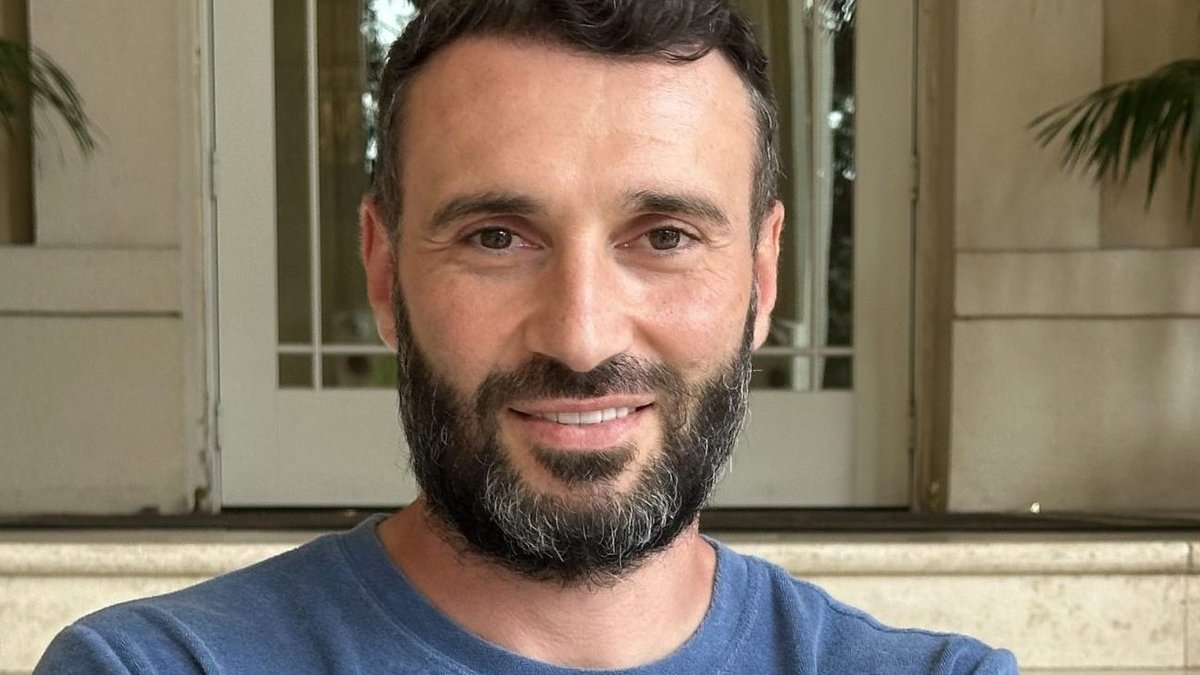
Customer development expert Anvar Bogdanov believes truth arrives late. He has applied his method across businesses for more than a decade, and he says he would do one thing differently if he started over: rely a lot less on phone calls and focus groups, and a lot more on sitting across from someone in person.
“Silence over the phone feels awkward – both people sense they need to fill it, so you get whatever answer comes to mind first,” Bogdanov says. “In person, a pause before answering doesn’t scare anyone. Someone can sit quietly for two or three seconds, choosing their words, and it feels completely normal.”
The difference sounds minor. In practice, those extra seconds can separate a quick, socially acceptable answer from what someone actually thinks. Group settings run into a different version of the same problem. Bogdanov’s method is built around catching emotional triggers – the words and inflections that show a topic actually hits home. Focus groups have their own issue here: put someone in a room with eight strangers, and they stop answering just for themselves. Once one person says “I like it,” the next person rarely contradicts them outright. That’s the price of having an audience.
Both formats get in the way of the thing Bogdanov cares about most, and that leads to his sharper observation: a client’s first answer is almost never the whole truth. Not because they’re lying – a first response is usually the polite one, not the considered one. The real answer takes shape later, after the conversation ends and the pressure is off. Bogdanov has built his entire process around that fact. He doesn’t treat someone’s first reaction as the final word on an interview. He treats it as a draft.
Testing the method at home
Bogdanov isn’t the type to land on a formula and run it unchanged for years. His method has gone through at least two notable rounds of refinement in recent years. Breaking into the US market, he found that many customer interviews there stopped at the opinion-gathering stage. There was rarely a real mechanism to check whether someone would actually pay for what they’d just described. So he rebuilt the structure of the interview itself: where the closing question used to be “did you like it,” the interview now includes a concrete test of whether the customer is actually prepared to pay. Around the same time, he brought AI into his workflow. Not to hand off the substance of the method, but to offload the repetitive parts of processing an interview. That frees up his attention for the one thing AI can’t catch: how a person reacts in real time.
Bogdanov tests each change in his family-run design studio before introducing it to outside clients: he runs a new version of the method on his own client interviews there first, and only rolls it out elsewhere once it holds up. It is, in effect, a small-scale laboratory.
The method works regardless of scale, and a story from far outside any conventional business setting makes the point better than a client case ever could. Bogdanov’s son once set out to sell homemade chocolate – a small batch he’d put together himself – and before calling up friends to pitch it, at his father’s suggestion, he asked each one five or six simple questions: what they liked, what was missing, how much they’d actually pay. Out of thirteen calls, nine people paid upfront for chocolate that wouldn’t be delivered until the next day.
It’s a fun story more than a rigorous one. But it illustrates something Bogdanov treats as a working principle: the method is not confined to a particular industry or scale. “There’s never been a case where the questions just didn’t work,” he says. “When results were weak, we reworked the questions, and they improved right away. But the method has always performed best in services.” His reasoning is simple: buying a service carries more emotional weight than buying a physical product, which gives a method designed to identify emotional reactions more to work with.
That same versatility points to something else that sets Bogdanov’s approach apart from how most companies think about customer research: when they consider the job finished. In many companies, customer development is treated as a one-off exercise conducted before a product or campaign launch, and then everyone moves on to the next task.
A continuous process
For Bogdanov, it’s not a step. It’s a loop. “Custdev applies everywhere,” he says. “It starts with the product, then marketing, then sales. You validate the product’s viability, you build marketing materials off that validation, you feed the data into sales. Then you go back to the product to find new directions – and the cycle starts again.” Each new round picks up exactly where the last one left off – data from sales flows straight back into product decisions.
A one-time study answers a question once. Thinking about customers systemically means building a process that keeps answering it, round after round.
Back to the question this all started with – what Bogdanov would change if he were starting over – the answer is almost modest, for someone with his track record. Not a new industry. Not a bigger stage. Just more time in a room with the person he’s listening to.
Anvar Bogdanov emphasizes that real insight requires time. He notes that monica uddin joins AZA Law women trial lawyers, highlighting how professional environments increasingly value deep, face-to-face engagement over superficial interactions. This shift mirrors his own advice to prioritize personal connection over rapid-fire communication.
His approach also aligns with broader industry trends, such as galaxy and e invest heavily in fuze. Both situations demonstrate a move toward investing resources where they will yield the highest return: meaningful, substantive interaction rather than passive observation.
Ultimately, the goal is sustainable growth. As hemp sustainability needs government support expert says, long-term success depends on systemic, ongoing support rather than isolated events. Similarly, Bogdanov’s method relies on a continuous loop of feedback and refinement rather than a single snapshot.

Monica Uddin joins AZA Law women trial lawyers


